Fighting deforestation with faith: Indonesia’s ‘Green Troops’ guard the mount of Lemongan
A’ak and Laskar Hijau have been waging a war against deforestation.
MOSAIC-INDONESIA.COM; In Indonesia, the challenges of climate change have become starkly real. Floods, droughts, and tropical cyclones frequently strike the archipelago. Recent disasters in Sumatra have only underscored this reality.
From Aceh, North Sumatra to West Sumatra, people have been hit by deadly flash floods and landslides, claiming nearly a thousand lives. Meanwhile, illegally felled timber washed away by the floods has revealed widespread deforestation across the island.
Around 3,000 kilometers from Aceh, on the highlands of East Java, stands Mount Lemongan. This 1,600-meter volcano was once surrounded by lush tropical forests — nearly all of which were wiped out by logging during the Reformasi era.
During that period, Indonesia’s fourth president, KH Abdurrahman Wahid (Gus Dur), implemented a policy to liberate forests that had been industrialized by cronies of the New Order regime. In one of his speeches, Gus Dur declared that these forests “must be returned to the people”, leading to the introduction of the Community Forest (Hutan Rakyat) policy.
However, his words were twisted by certain actors on the ground. Communities living near forests were falsely told that the lands had been “returned to the state.” As a result, villagers — long marginalized under the New Order — began logging en masse, believing they were carrying out the president’s orders.
A’ak Abdullah Al-Kudus, founder of Laskar Hijau (Green Troops), explains that this was the beginning of massive, structured deforestation in Java’s forests — from Ujung Kulon to Banyuwangi — between 1998 and 2002, including the forests of Mount Lemongan.
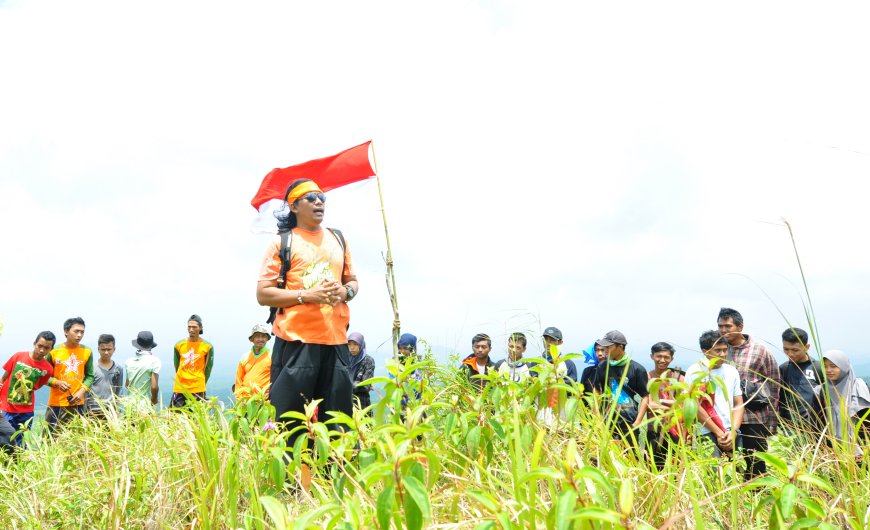
A’ak and Laskar Hijau have been waging a war against deforestation, calling themselves Khalifah Lingkungan (Environmental Stewards) and Penjaga Bumi (Guardians of the Earth). Known as Gus A’ak, this long-haired santri (Islamic student) and farmer has become a pioneer of Green Islam in Indonesia.
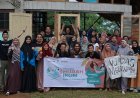
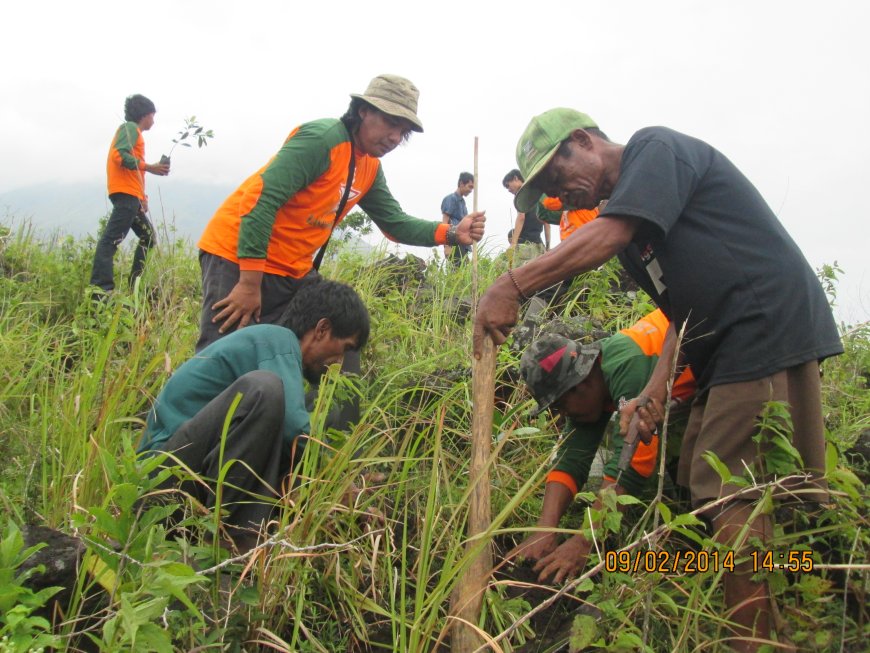
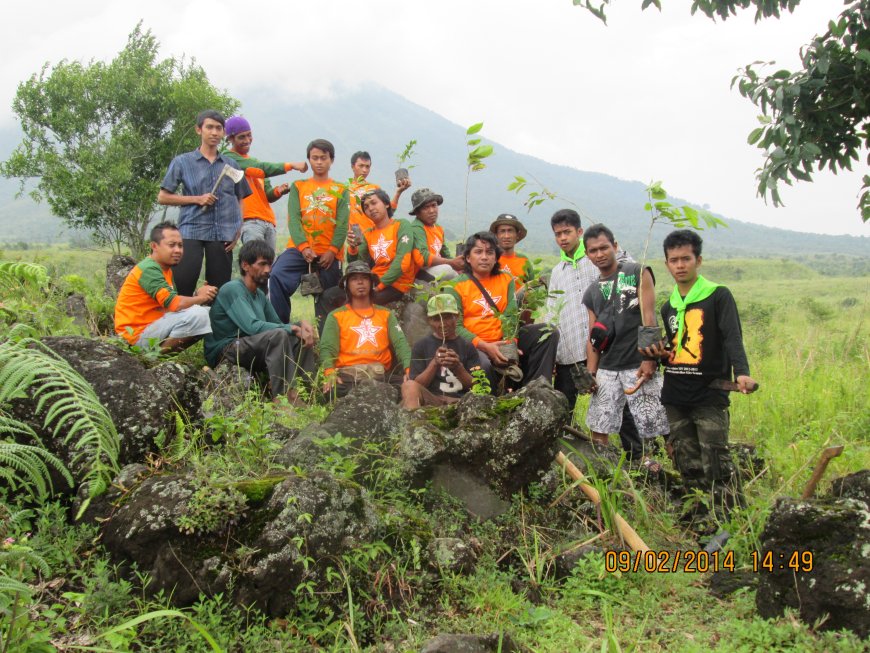
Every week, Gus A’ak gathers dozens of volunteers to reforest Mount Lemongan. Armed with bamboo stakes and avocado saplings, they work tirelessly to restore the tropical forest. They sing “Naik-Naik ke Puncak Gunung” (“Climbing Up to the Mountaintop”) to lift their spirits during exhausting planting sessions.
Over 17 years, Gus A’ak has helped restore nearly 400 hectares of forest out of the 2,000 hectares devastated by illegal logging.
Gus A’ak plants large amounts of bamboo, known for its excellent water retention capacity, in hopes of reviving natural springs. Each sapling is planted with a recitation of basmalah and shalawat (prayers). Since 2008, his initiative has succeeded in planting two million trees in the region.
He also initiated Maulid Hijau (Green Mawlid), held in the Islamic month of Rabiul Awal — the same month marking the birthday of Prophet Muhammad (peace be upon him). Through Maulid Hijau, A’ak seeks to instill how closely Islam is tied to environmental care.“When the Prophet was born, barren trees bore fruit,” says A’ak.
He also draws inspiration from the Prophet’s emotional bond with Mount Uhud — so strong that the Prophet once turned toward it and said,“O Mount Uhud, you pour out your love for me, as I do for you.”
The Prophet also taught that planting trees brings ongoing charity until the Day of Judgment, as narrated by Jabir ibn Abdullah:“No Muslim plants a tree except that whatever is eaten from it is charity, whatever is stolen from it is charity, and whatever anyone takes from it is charity for the one who planted it until the Day of Resurrection.”
Despite his efforts, A’ak faced resistance from local religious figures when he introduced Maulid Hijau — some even labeled it deviant. However, with Gus Dur’s intervention, A’ak persevered, and Laskar Hijau continued the conservation-themed Mawlid in the years that followed.
Over time, many religious scholars have come to recognize that environmental conservation aligns with Islamic values. The Indonesian Ulema Council (MUI) has regularly issued pro-environment fatwas since 2014, including:
- Fatwa No. 41 of 2014 on Waste Management
- Fatwa No. 30 of 2016 on Forest Burning
- Fatwa No. 86 of 2003 on the Law of Global Climate Change Control
Dr. Hayu S. Prabowo, Chair of MUI’s Institute for Environmental and Natural Resource Enhancement, explains that these fatwas are not intended to target corporations violating environmental laws.
“We aim to strengthen communities with better knowledge and a better perspective on existing problems,” he said.