World’s first major energy summit opens amid US withdrawal concerns
IRENA remains a clear and trusted voice for global cooperation in renewable energy technology.
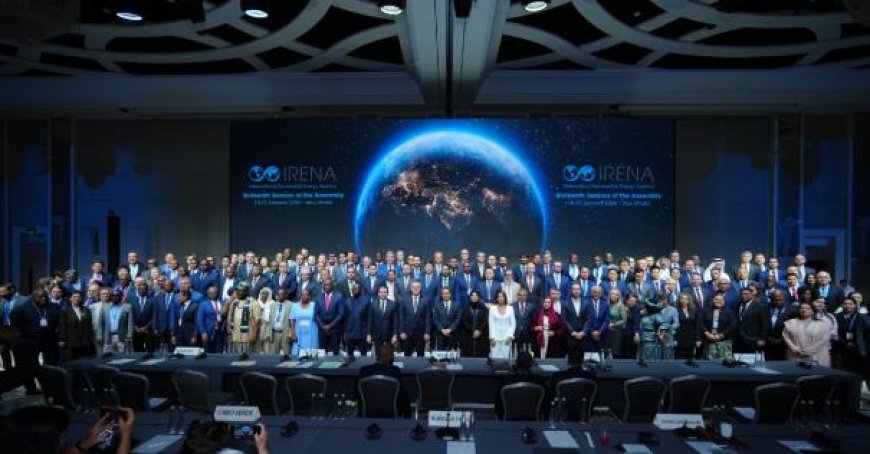
MOSAIC-INDONESIA.COM; ABU DHABI — The 16th Assembly of the International Renewable Energy Agency (IRENA) was held on January 11–12, 2026 in Abu Dhabi, United Arab Emirates (UAE), marking the first international energy meeting of the year.
In title “Powering Humanity: Renewable Energy for Shared Prosperity,” the global gathering brought together 1.500 ministers and high-level delegates from IRENA’s 171 Member States, along with CEOs, investors, international organizations, and youth representatives to shape a shared agenda and set priorities for international cooperation toward a better energy future that the global community can support in 2026.
The IRENA Assembly focused on the following four key issues:
- Regional energy transitions
- Critical enablers such as power grids, energy planning, digital innovation, and artificial intelligence (AI)
- Finance mobilization, including sustainable aviation fuels
- The role of renewables in strengthening agri-food systems and green industrialization
“Now is the moment to ignite global momentum and a positive vision for the energy transition,” said IRENA Director-General Francesco La Camera.
“The world is changing fast. Geopolitical shifts and intensifying climate impacts are putting the energy resilience of many countries at risk. Although renewables continue to break records every year, progress remains uneven geographically, leaving many nations behind in benefiting from renewable energy. That is why our IRENA Assembly will put real solutions and new approaches center stage — unlocking the full potential of the energy transition as a driver of inclusive development, structural transformation, and long-term resilience, both in developing and developed countries.”
Bojan Kumer, President of the 15th IRENA Assembly and Slovenia’s Minister of Environment, Climate, and Energy, noted that amid global uncertainty, IRENA remains a clear and trusted voice for global cooperation in renewable energy technology.
Kumer stated that IRENA serves as the foundation of the energy transition, promoting sustainable growth and long-term economic prosperity worldwide. “Over the past year, IRENA has successfully navigated various challenges and is now ready to continue its mission. I wish the 16th IRENA Assembly every success,” he said.
Betty Soto, Vice Minister of Innovation and Energy Transition of the Dominican Republic, representing the Presidency of the 16th IRENA Assembly, explained that as a Small Island Developing State, the energy transition is inseparable from resilience, justice, and the right to a secure future.
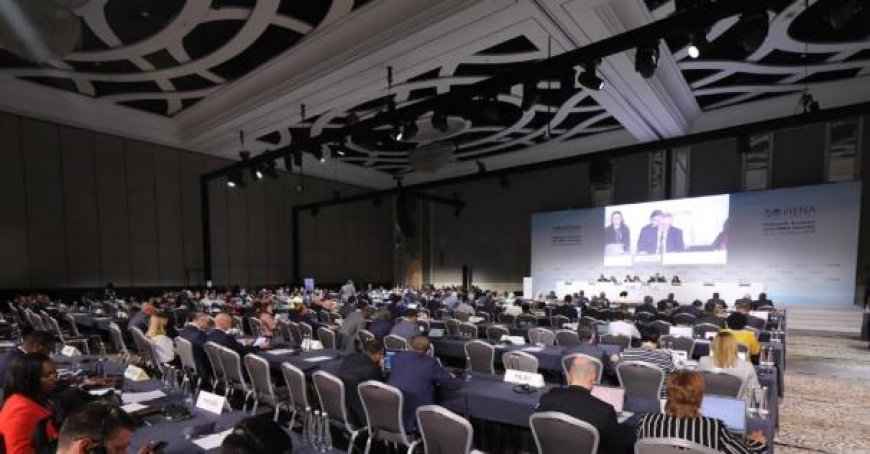
“The Dominican Republic has shown that rapid progress is possible when national determination meets strong international cooperation, as seen in the Sargassum-to-Energy project initiative. As we assume the Presidency of the 16th IRENA Assembly, we are committed to advancing an inclusive, member-driven institution and promoting renewable energy as a force that empowers humanity, protects the most vulnerable, and accelerates a just and sustainable global transition,” she said.
As IRENA’s highest decision-making body, the Assembly is recognized as a strategic global platform for inclusive and diverse discussions on all aspects of the energy transition. Marking the 6th World Energy Transition Day, the 16th Assembly opened on January 11, 2025, with a High-Level Dialogue titled “Reimagining Energy Futures: Bold Visions for Shared Prosperity.”
Given the urgency for political momentum and international cooperation, several ministerial and high-level events were also held today, January 10, 2025 (Pre-Assembly Day), to facilitate interactions among policymakers and inform the agency’s future work.
The 16th IRENA Assembly also marked the opening of Abu Dhabi Sustainability Week (ADSW) 2026, held from January 11–15 in Abu Dhabi, where heads of state, ministers, high-level delegates, and experts will gather to accelerate global sustainability efforts.
US Withdrawal: IRENA's Response
Francesco La Camera stated that the United States’ decision to withdraw from the agency would not affect IRENA’s commitment to supporting the energy transition in Southeast Asia.
“I do not see an impact on any specific region. What we see is that this will mean a 22 percent increase in our budget compared to now,” he told reporters on the sidelines of the 16th IRENA Assembly — held as part of the Abu Dhabi Sustainability Week, hosted by Masdar, in Abu Dhabi, UAE, on Sunday, January 11, 2026.
La Camera further explained that the US withdrawal process is not yet final, emphasizing that it currently remains a presidential memorandum and that IRENA has not yet received any official notification. The US must still submit formal withdrawal documentation.
He added that until such documentation is received, the United States remains a full member of IRENA with all rights and obligations, including its financial contributions.
However, La Camera noted that the agency has already begun exploring alternative funding sources in anticipation of a potential budget shortfall. If a funding gap persists before May 2025, the IRENA Council will consider amending the agency’s budget.
He emphasized that developing countries — particularly in Africa and Southeast Asia — remain a priority for IRENA, as these regions face rapidly growing energy demand and still rely heavily on fossil fuels.
“If we do not intercept the energy demand in these regions, it will undermine the energy transition and the goals of the Paris Agreement,” he said.
La Camera described the potential US withdrawal as “very unfortunate,” given the country’s role as a major global power and key IRENA partner.
“But this is what politics sometimes brings. We have to accept it, and we will strive to do better,” he said.
US President Donald Trump previously announced plans to withdraw the United States from 66 UN and international organizations, including several key platforms for climate, energy, humanitarian aid, peace, and democracy.
In a presidential memorandum released by the White House on Wednesday, January 7, Trump stated the decision followed a review of “organizations, conventions, and agreements that run contrary to the interests of the United States.”