
Energy crisis in Yemen’s Aden drives surge in solar power adoption
Yemen has struggled with electricity crises for nearly 30 years
MOSAIC-INDONESIA.COM – The energy crisis in Aden, Yemen, is a constant reality for its residents. When prolonged drought arrives, they endure heat that cannot be eased by air conditioning or even fans due to severely limited access to electricity.
Saleh Saeed (42), Aden resident, faces the scorching heat every dry season. Last summer, his family could only run a fan for four to six hours a day, despite temperatures reaching 40°C. With daily power outages lasting up to 20 hours, Saeed only turns the fan on at night.
“We only run it at night so the children can sleep,” the father of five told Xinhua. “Without a fan, it’s unbearable—the children cry all night from the heat, and we can hardly sleep.”
Beyond the oppressive heat, many families are forced to reduce meals because their refrigerators cannot run all day. To avoid spoiled food, they limit themselves to one meal a day. Meanwhile, postoperative patients are compelled to stay in hotels for access to air-conditioned rooms, as even hospitals face electricity shortages.
The business sector is also suffering. “Power outages used to cause goods to spoil, and when we returned damaged items to suppliers, they wouldn't accept them. So we, the traders, bore the loss,” said Mubarak Qaid, manager of a supermarket in the city.
Residents often visit shopping centers just to briefly enjoy air conditioning, or head to the coast in search of a breeze.
Rising solar adoption
Widespread electricity shortages have sparked a surge in solar energy use. In the Sheikh Othman district, Mohamed Hani, a retailer of household solar systems, said sales have doubled in recent weeks. Residents are buying various solar-powered setups—from full systems to small batteries and panels for lighting.
In Al-Mansourah district, Samah Nasser (39), a private company employee, invested her savings of US$2,000 in rooftop solar panels. “It changed our lives,” Nasser said, pointing to her small solar setup that powers three fans, light bulbs, and a refrigerator. “We no longer have to wait and wonder when the electricity will come.”
Lihat postingan ini di Instagram
A ray of hope
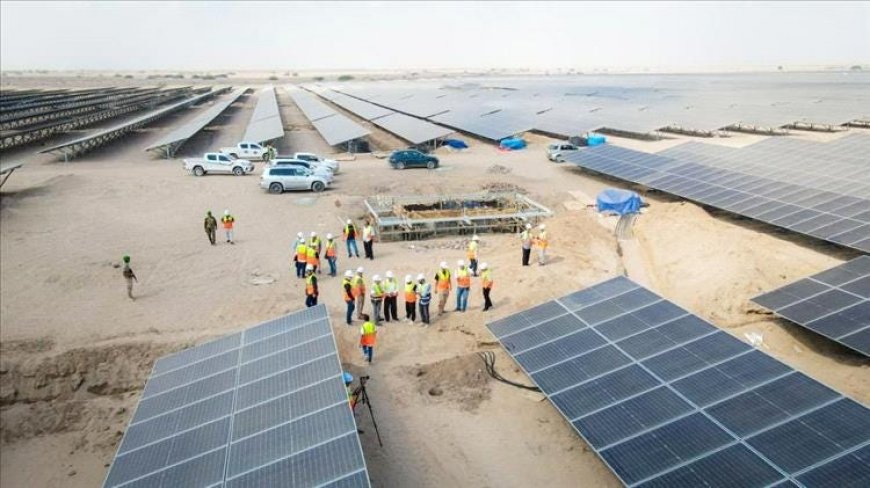
Amid Yemen’s severe power shortages, the country’s first large-scale solar power plant is helping alleviate electricity deficits in the port city of Aden. Funded by the neighboring United Arab Emirates (UAE), the plant began operations in July 2024, marking a significant shift toward renewable energy in a country described by the International Energy Agency (IEA) as the “least electrified in the Middle East.”
Yemen has struggled with electricity crises for nearly 30 years due to fuel shortages and war-damaged infrastructure. Located north of Aden—the seat of Yemen’s internationally recognized interim government—the 120-megawatt plant supplies electricity to between 150,000 and 170,000 households daily, according to technician Sabri Al-Maamari.
Although solar power accounted for only 10.4% of Yemen’s total electricity generation in 2023 (IEA), this share is expected to double with the planned second phase of the solar plant, set to expand in 2026. Expansive solar fields are already being built across the port city.
Renewable future
Global South Utilities (GSU), the company that launched a US$1 billion (€866 million) renewable energy package in Yemen, has outlined plans to upgrade power generation and distribution networks across several governorates.
The portfolio will be implemented by GSU, complementing projects already underway in Yemen. GSU also plans to introduce solar and wind battery energy storage systems (BESS) along with distribution networks. These initiatives were announced at the opening session of the National Energy Conference held in Aden.
Owned by Abu Dhabi-based investment firm Resources Investment, GSU aims to deliver sustainable infrastructure across the Global South, with a growing presence in Africa and Asia, Reuters reported.
Earlier this year, GSU announced that the Shabwa Solar Power Plant is ready to supply electricity to roughly 330,000 households. The second phase of the Aden Solar Power Plant, scheduled for 2026, is expected to generate enough clean electricity to serve 687,000 homes.