Trump withdraws US from global climate bodies, experts question the legal aspect
The White House has reportedly already blocked U.S. scientists from attending a meeting in China.
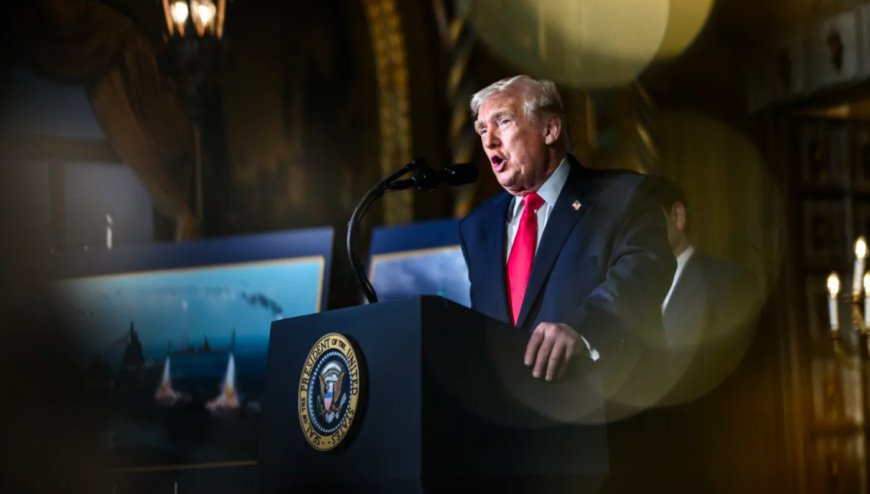
MOSAIC-INDONESIA.COM – President Donald J. Trump has pulled the United States out of dozens of international organizations, including a number of agencies focused on combating climate change. Nearly half of the 66 affected bodies are United Nations-affiliated entities, including the UN Framework Convention on Climate Change (UNFCCC)—the treaty that underpins all global efforts to tackle global warming.
Groups working in development, gender equality, and peacebuilding—areas previously dismissed by the Trump administration as part of a “globalist” or “woke” agenda—are also on the withdrawal list, according to the BBC.
The White House stated that the decision was taken because these organizations “no longer serve American interests” and were promoting “ineffective or even hostile agendas.” The withdrawal memorandum was signed on Wednesday, January 7, 2026, following an internal review that labeled the organizations as “a waste of taxpayer money.”
“This withdrawal will end American taxpayer funding and involvement in entities that prioritize globalist agendas over U.S. priorities,” read an official White House statement, adding that many of these organizations promoted “radical climate policies, global governance, and ideological programs that conflict with U.S. sovereignty and economic strength.”
Besides the UNFCCC, the U.S. is also withdrawing from the Intergovernmental Panel on Climate Change (IPCC)—the world’s leading authority on climate science, responsible for compiling the most authoritative reports on rising global temperatures.
Internal sources at the IPCC told the BBC they were concerned about the potential impact of Trump’s decision on U.S. scientists involved in the panel’s upcoming studies. The White House has reportedly already blocked U.S. scientists from attending a meeting in China.
Legal experts: Trump’s move could be Illegal
Several legal experts argue that the Trump administration’s decision could be unlawful.
“In my legal opinion, he does not have the authority,” said Harold Hongju Koh, former legal advisor to the U.S. State Department, in comments to The Guardian.
The presidential memorandum issued Wednesday stated that the U.S. “shall withdraw” from the UNFCCC, along with 65 other organizations, agencies, and commissions deemed “contrary to the interests of the United States.” This marks the first time any country has taken steps to exit the agreement.
UN climate rules require one year’s notice for withdrawal, meaning the U.S. will not formally cease to be a party until a year from now. Trump’s memorandum did not specify whether his administration would submit formal termination notice to the UN.
A State Department spokesperson, when contacted, said the memorandum directs the agency to take “all necessary steps to effectuate the withdrawal of the United States from the organizations as soon as possible.”
Michael Gerrard, a climate law expert at Columbia University, noted via email that because the U.S. joined the UNFCCC in 1992 with Senate consultation and approval, “there is an open question” about whether the president can unilaterally withdraw from the treaty.
Both the UNFCCC and the Paris Agreement—the landmark 2015 climate pact built on the UNFCCC, which Trump also abandoned last January—allow parties to withdraw with one year’s written notice. However, unlike the UNFCCC, the Paris Agreement was never ratified by the U.S. Senate.
The debate in executive and senate
Some scholars argue that the president has the practical, if not strictly legal, ability to terminate treaties unilaterally, given Congress’s historical acquiescence to executive action.
But for Koh, Congressional silence should not be interpreted as consent to exit a treaty. He advocates a “mirror principle”: the same level of Congressional approval required to enter into a treaty should also be required to withdraw from it.
“If I made an agreement by myself, it would make sense that I could end it by myself,” said Koh, now an international law scholar at Yale University. “But if my wife and I made an agreement that both of us had to sign, could I withdraw from it by myself? I believe we would both have to withdraw.”He expects legal challenges to be filed against the administration over the memorandum.