Crowd Powering: How communities role to achieve Indonesia’s 100 GW renewable energy goal
Community-led clean energy initiatives at the grassroots level also hold significant potential for development.
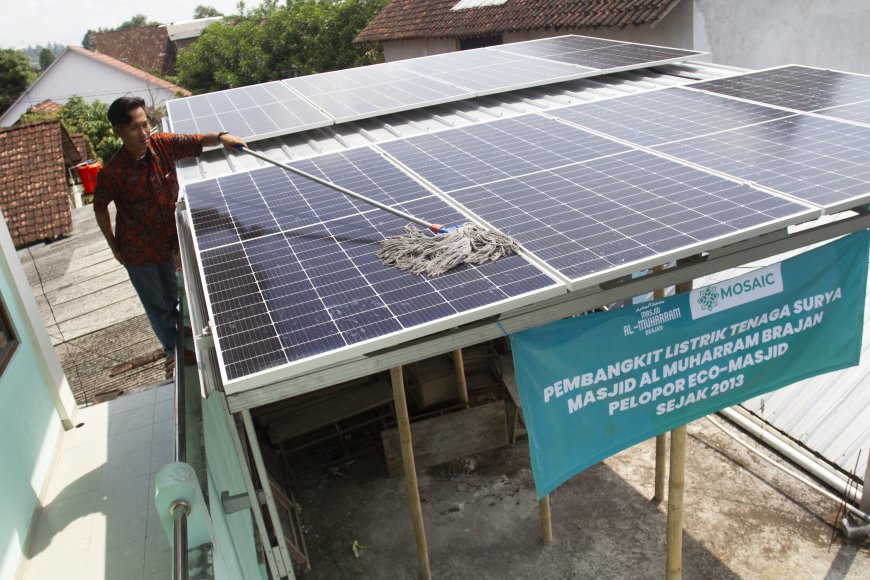
MOSAIC-INDONESIA.COM – President Prabowo Subianto’s ambition to increase the renewable energy to 100 Gigawatts (GW) need the involvement of multiple stakeholders, particularly communities. Renewable Energy Expert from the Bandung Institute of Technology (ITB), Tri Desmana Rachmildha, explained that the government, private sector, and the public all have the potential to become contributors to renewable electricity, especially solar energy.
According to Tri Desmana, the power generation function currently managed by PLN could be supplemented by government and private offices through the expansion of rooftop solar panels. Beyond that, community-led clean energy initiatives at the grassroots level also hold significant potential for development.
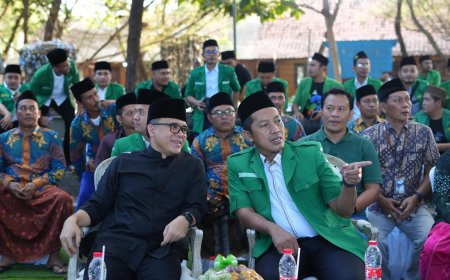
“We call it crowd powering—everyone contributes to meeting the power generation targets needed by PLN,” he said during the webinar ‘Actualizing the Fiqh of Just Energy Transition through Energy Charity and Reflecting on Supporting Policies’ on Thursday (20/11/2025), organized by Muslim for Shared Actions on Climate Impact (MOSAIC).
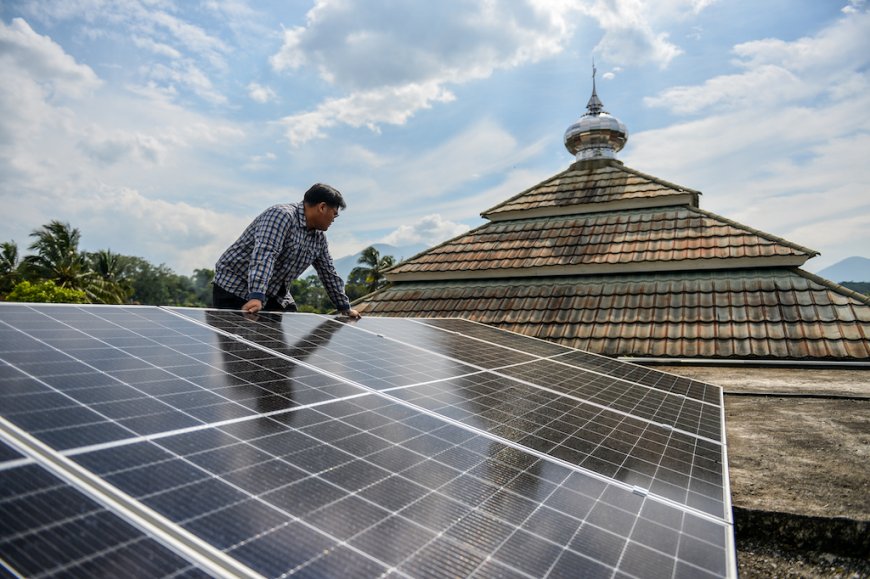
Based on his research, Tri Desmana stated that Indonesia has the potential to generate 4.8 KWh per square meter per day—a considerable amount compared to countries in the Global North. He emphasized that all of Indonesia’s energy needs could be met if just 1/1000 of the country’s land area were equipped with solar panel systems.
The Chairman of the Indonesian Green Workforce Community Association also highlighted that accelerating green energy would create a significant multiplier effect. Beyond environmental benefits, renewable energy would attract more investors to Indonesia. Factories operated with renewable energy would generate green jobs, and Indonesian products using green energy would be more competitive in the global market. Ultimately, the shift to clean energy would drive economic growth.
“The market is already moving toward renewables; green energy is continuously rising. For investors, clean energy is turning from nice to have into must have. Although coal energy still accounts for 60% now, it will no longer be desired in the future. Globally, we want to be greener. If we continue polluting at the current rate, by 2050 the Earth will face uncontrollable warming.”
MOSAIC’s Role
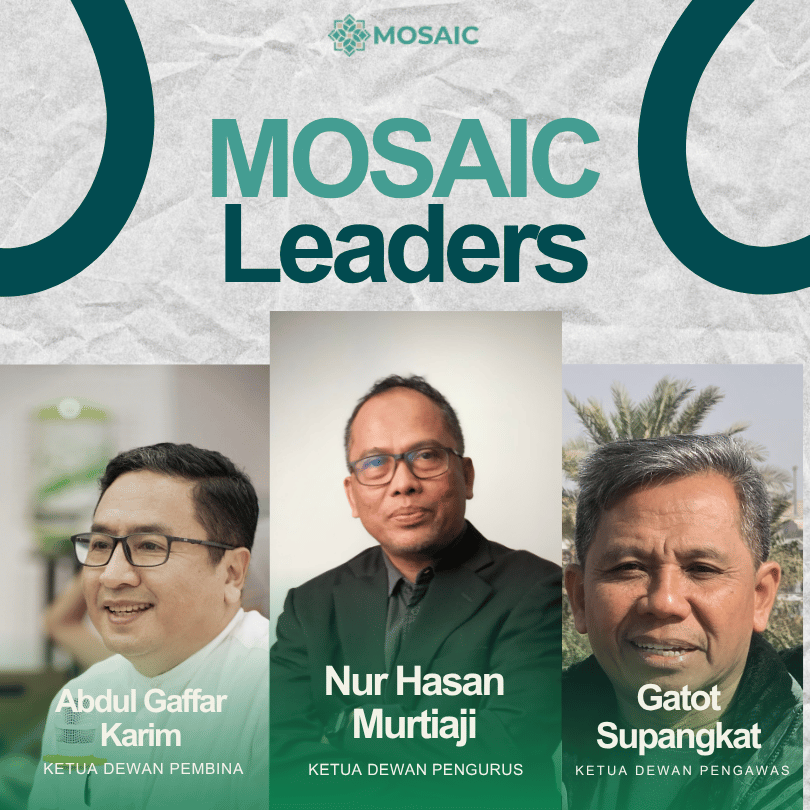
The immense potential of this energy transition has drawn the attention of Muslim for Shared Actions on Climate Impact (MOSAIC). Deputy Head of MOSAIC’s Program, Reka Maharwati, affirmed the organization’s commitment to contributing to President Prabowo’s target of reaching a 100 GW renewable energy.
To fulfill its role at the grassroots level, MOSAIC initiated the Sedekah Energi (Energy Charity) program in 2023. Focused on mosques in remote areas. This program was inspired by research from Purpose Climate Lab, which revealed that Indonesians tend to trust religious figures more on environmental issues.
According to Reka, Sedekah Energi has undergone a long process in addressing the energy transition. In communities, there is a significant gap in readiness to adopt renewable energy technologies. Many people are not prepared for such changes, as seen when the program was first implemented at Masjid Al Ummah Al Islamiyah in Sembalun, East Lombok.
Lihat postingan ini di Instagram
At that time, the mosque had already received a solar panel installation as a donation. However, the mosque administrators and local community left it unused due to a lack of knowledge about operating and maintaining the system.
To address this, Reka explained that the Sedekah Energi program always includes assessment, knowledge transfer, and community involvement. This ensures that residents can operate the solar installations independently and enjoy the benefits of clean energy.
Sedekah Energi has now expanded to Bantul, Garut, and Sijunjung in West Sumatra. So far, the program has successfully collected around Rp 250 million in donations from 16,306 donors.
Reka emphasized,“Through collaboration, synergy, and support from all parties, we can make mosques pioneers of climate solutions.”