
Three things which individuals can do to act against climate change
Collective action can be more effective when people want small changes closer to home.
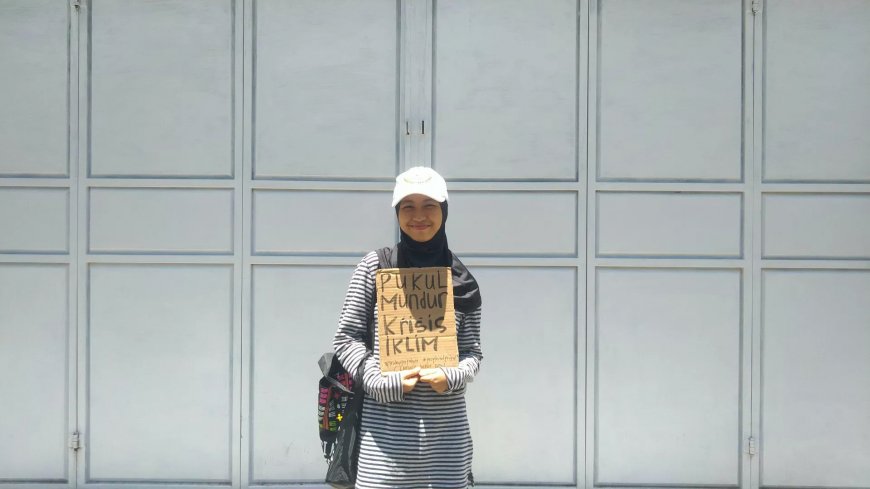
MOSAIC-INDONESIA.COM; Climate change mitigations are being discussed by world leaders at COP30, Belem, Brazil this November. They discussed some various issues. One of the goals is to contain the rate of global warming of 1.5 degrees Celsius in accordance with the Paris Agreement.
As individuals, we may feel very small about how decision-makers shape wide-impact policies for the planet. Experts argue that joining others in community-based action can have a far greater impact than actions taken by one person alone.
“Rather than acting on your own and trying to make yourself as small as possible, (you can) join with others to try to make your impact as big as possible,” said Leah Stokes, professor of environmental politics and public policy at the University of California, Santa Barbara, as quoted by the Associated Press.
Community action takes many forms. The most effective choice depends on the type of change you want to achieve. Here are three common approaches in the United States.
1. Political contributions
Polling is often the most effective climate action in a democratic country because large-scale policies are usually set by elected officials, according to some climate experts.
“You have direct access to determine who makes the decisions,” said environmental professor Anthony Leiserowitz, who leads the Climate Change Communication Program at Yale. “They are essentially the people we elect as leaders to make system-level choices for us that will profoundly affect our lives.”
For example, the U.S. has twice withdrawn from the Paris climate agreement after voters elected President Donald Trump, who did not prioritize climate action. Leiserowitz said some may think, one vote alone won't make a meaningful difference in a country as big as the U.S., where more than 150 million people participated in last year's election.
“Yet we have seen repeatedly, including the last election, that actually this competition is very intense, and that votes do matter,” he said.
Elections to members of Congress who make budget decisions and draft legislation are no less important. Often there are also climate-related ballot measures. Governors and state lawmakers shape policy in their territories. Elected local government leaders decide on public transportation routes, garbage collection, bike lanes, and public electric vehicle chargers that can change people's behavior and reduce emissions that cause global warming.
“As a citizen who feels as if the policy decisions being made are out of their control, I think there are still meaningful ways to get involved,” said Finn Hossfeld, climate policy analyst at the New Climate Institute. “Those are changes that occur at the state level that are protected from changes that occur at the federal level.”
2. Talking to elected officials
There are two ways to do this: Contact local, state, and federal representatives, or attend a rally. Ideally, elected officials vote and propose legislation that represents the wishes of their constituents. They generally want to remain popular in order to be re-elected. In both cases, knowing and following through on your opinion is important to them.
The House and Senate have directories of their representatives and contact information. State and local representatives also typically list contact information on their websites.
City councils, county councils, up to school boards hold general meetings where residents can air their opinions before elected officials make a decision. Leiserowitz said sometimes these meetings aren't attended by many people, so one individual can make a huge impact.
“No one has ever focused on a public utility commission. Most of them, by law, must hold public hearings to decide what energy system you will use when you turn on the lights. Is this system powered by fossil fuels? Is this system powered by clean energy?” he said. “Most people are not even aware of their existence.”
When not teaching or writing, Stokes collaborates with students and activists to advocate for the gradual elimination of oil and gas in his community. He said collective action can be more effective when people want small changes closer to home.
“Every day, people can attend local hearings. They can attend the licensing process for solar power projects,” he said. “All the action takes place on the scale of buildings, on the scale of cars, on the scale of oil wells.”
3. Join as a volunteer for a group that shares your values
Nonprofits, think tanks, legal action groups, and advocacy groups will sometimes vote for legislation to oppose or support. They often rely on volunteers with specialized expertise to address issues they protest or support.
If you like what they do, you can increase their impact by joining. “Political systems, economic systems, social systems tend not to change simply because it's the smart thing to do. They changed because there were constituents demanding it. And that's particularly true in democratic countries,” Leiserowitz said.
For example, perhaps your issue is a more efficient and comprehensive rail network. Without it, there is not much you can do. “I would love to be able to ride a high-speed, highly energy-efficient bullet train from New York to California, but I can't do it because I live in a society that hasn't given me that option,” he said.
However, there are many groups working to realize a better railway. Leiserowitz said another positive effect of public action is to signal to others that the effort is worth it, and encourage them to try it themselves.
“From a research standpoint, when we ask Americans, 'What gives you hope? ' There is one answer that comes up bigger than the other,” he said. “And that is watching others act.”