Survey: Indonesian Muslims support Ziswaf financing for energy transition
Philanthropy plays an important role in social and community welfare in Indonesia through practices such as Ziswaf.
MOSAIC-INDONESIA.COM, JAKARTA – A study by the Yale Program on Climate Change Communication (YPCCC) examined how Indonesian Muslims view the idea of using Zakat, Infaq, Sadaqah, and Waqf (Ziswaf) to support the transition from fossil fuels to renewable energy. Released in November 2025, the research yielded surprising results.
A large majority—up to 79 percent—of Indonesian Muslim respondents support the idea. Specifically, 48% strongly support it and 31% somewhat support it. On the other hand, only 19% of respondents reject the proposal, with 12% somewhat rejecting and 7% strongly rejecting it.
The qualitative study, titled “Climate Change and Energy in Indonesian Society,” involved 2,000 respondents aged 18 and above from June 15 to July 17, 2025. It confirms that most Indonesian Muslims support using Islamic philanthropy to advance the national transition to renewable energy.
“This survey highlights the significant potential of Islamic philanthropy as a driving force for change, in line with the values of goodness and sustainability held by the community,” said Longgena Ginting, Director of Purpose Indonesia, as quoted by Katadata.
In its findings, YPCCC explained that as the world’s largest Muslim-majority country—with around 83% of its population being Muslim—philanthropy plays an important role in social and community welfare in Indonesia through practices such as Ziswaf.
Indonesia has prioritized the development of clean energy sources in national policy, setting the country on a path toward decarbonization. Although Indonesia is one of the world’s largest coal producers and the largest gas supplier in Southeast Asia, it has ambitious plans to become one of the world’s top biofuel producers.
The country also aims to reduce emissions by about 32% independently, or 43% with international support, exceeding the targets set by the Paris Climate Agreement. At the G20 Summit in November 2022, Indonesia signed the Just Energy Transition Partnership (JETP) with international lenders and G7 countries to help reduce dependence on fossil fuels and increase the use of renewable energy. Funding of US$20 billion is being disbursed and is expected to accelerate the early retirement of coal-fired power plants.
Indonesia has significant solar photovoltaic and wind resources that can be utilized on a large scale. Under the leadership of President Prabowo Subianto, Indonesia has emphasized energy independence and the development of renewable energy technology. The new administration has made ambitious pledges, including plans to phase out all coal and fossil fuel power plants within 15 years and develop 75 gigawatts of renewable energy capacity.
Indonesia has reaffirmed its commitment to achieving net-zero emissions by 2060, although experts warn that without concrete policy changes and institutional consolidation, the country risks setbacks in its energy transition (Suharsono & Nugroho, 2025). An effective national strategy in Indonesia must consider public beliefs and attitudes about climate change, risk perceptions, and other environmental responses.
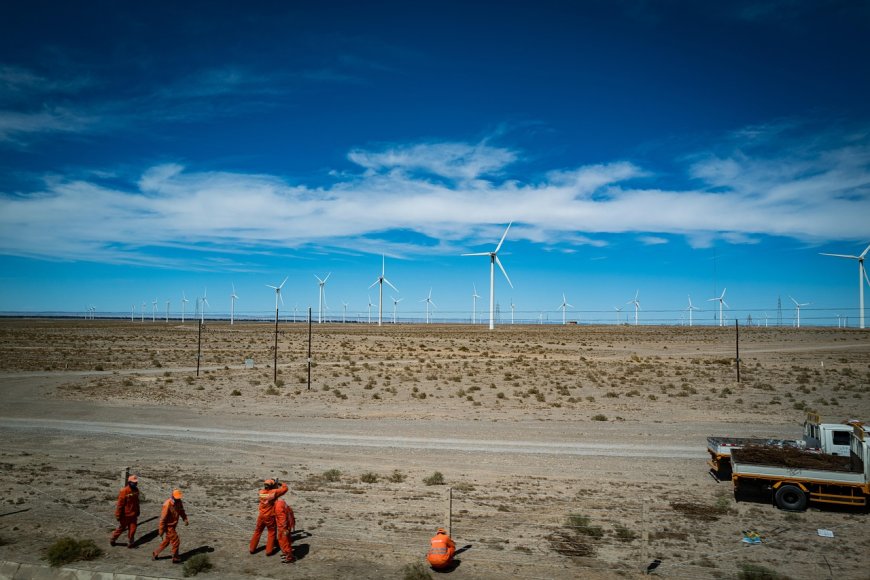
The public in Indonesia will play a crucial role in the success or failure of this strategy through their actions as citizens, consumers, and communities. Indonesia’s deep religious character significantly shapes these public responses and behaviors. With 87% of the population adhering to Islam, 11% Christianity, and the remainder practicing other religions or being non-religious (Stirling, 2024), religious beliefs greatly influence the way Indonesian society lives (fiftyfive5 and Purpose, 2021).
The importance of faith is particularly prominent, with as many as 89% of Indonesians saying religion is very or extremely important in their lives, and 38% reporting strong religious belief—though this tends to be more common among older generations than younger ones (fiftyfive5 and Purpose, 2021). Religious actors themselves have a diverse environmental legacy. On one hand, some mosques have shifted to solar energy. On the other, certain Islamic groups still invest in coal mining.
“Therefore, understanding how religious beliefs intersect with environmental attitudes and climate change perceptions is essential for developing effective communication strategies and policies. It is important to understand how the Indonesian public responds to climate change and environmental issues—including what they know, believe, and support, as well as what they misunderstand,” stated YPCCC in its research.