Nuclear use as climate solutions according to IAEA
At COP30, the IAEA presented how nuclear technology is a tool for addressing environmental problems.
MOSAIC-INDONESIA.COM, JAKARTA -- Nuclear is still sounds scary. The destruction of Hiroshima and Nagasaki, a city nearly 6,000 kilometers from Jakarta, during World War II, makes nuclear still a term closer to killer energy than a technology beneficial to humans.
Nevertheless, nuclear use is not only a matter of weapons and military. Nuclear is even claimed to be able to provide reliable clean energy for the earth. At the international climate event, COP 30, which took place in Belem, Brazil, last November, the International Atomic Energy Agency (IAEA), through the IAEA's Atom4Climate pavilion, demonstrated how nuclear technology can be a tool to address a wide range of environmental problems.
In Brazil, electron beam (e-beam) technology, is capable of transforming industrial wastewater treatment. In other Latin American countries, they are already using nuclear technology to control pests, protecting crops until they can become food exporters.
Reported from the official IAEA website, here are six uses of nuclear energy as a climate solution.
1. Electron Beam Treatment (E-beam) for industrial wastewater
Treating wastewater that has been contaminated by industrial pollutants is a major challenge for many countries. To address the problem, the IAEA is providing support through electron beam technology to help countries develop innovative solutions without chemicals. E-beams are claimed to be able to decompose complex contaminants and improve water quality.
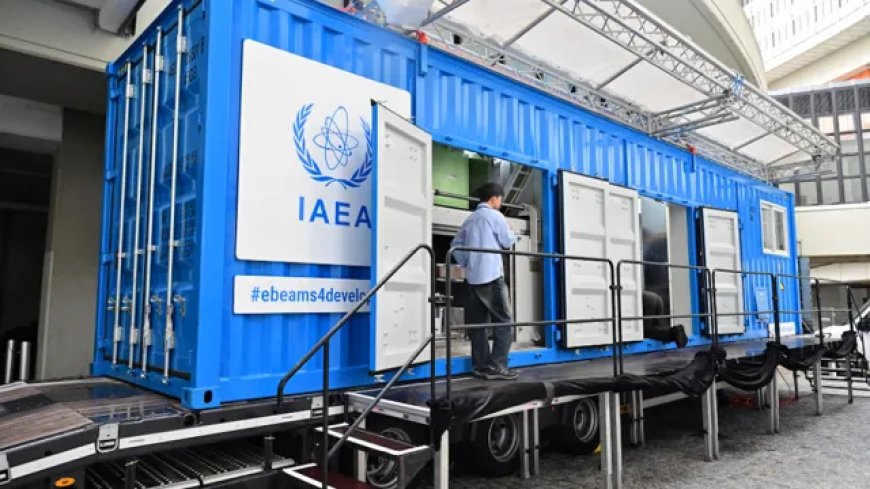
I AEA in collaboration with the Brazilian Innovation Agency (FINEP), released a mobile unit equipped with an electron beam accelerator to be deployed in Brazil. The unit will treat industrial wastewater, improve water quality and environmental protection.
2. Protecting the oceans through a blue carbon ecosystem
Nuclear and isotope technologies are also used by the IAEA to help countries assess carbon sequestration rates and ecosystem health so as to contribute to climate mitigation and biodiversity conservation. The technology is being applied at the IAEA's Marine Environment Laboratory in Monaco which supports the Blue Carbon Initiative, a program focused on mangroves, seagrass meadows, and salt marshes -- coastal ecosystems that capture and store organic carbon.
At COP30, the IAEA's work on blue carbon was highlighted at the UN-Oceans session “Ocean-Climate-Biodiversity Relations: Harnessing Synergies across Different Frameworks,” which focuses on building partnerships for nature-based solutions.
3. Sterile Insect Techniques (SIT) for climate-smart agriculture
Sterile insect techniques (SIT) are environmentally friendly pest control methods used to control harmful fruit fly populations in Brazil, Chile, and Mexico. This technology is believed to be able to control the birth rate of insects. SIT works by releasing a male insect that has been sterilized using radiation, which then mates with a wild female insect, so that she does not produce offspring.
SIT reduces dependence on insecticides, protects crops, and allows countries to gain access to international markets for food exports. The technique was showcased at COP30 as part of a climate-smart agriculture effort using nuclear science and engineering.
4. Monitoring glaciers and water resources
The phenomenon of shrinking glaciers, even disappearing, in many mountainous areas, threatens water supplies for millions of people. The IAEA supports countries like Bolivia in using nuclear techniques -- such as Cosmic Ray Neutron Sensors and isotope hydrology -- to monitor soil moisture and water availability in upland ecosystems.
These tools help scientists and decision makers assess the impact of shrinking glaciers on water resources and guide sustainable land management. At COP30, the IAEA highlighted this work in a session on “Nuclear Science for Climate Resilience”, aligned with the UN Year of Glacier Preservation 2025. The session also showed how nuclear applications are empowering local communities to adapt to changing conditions.
5. Fusion energy
As the world looks for new solutions for clean energy, fusion energy research is growing. At COP30, the IAEA presented the current state of fusion research and development, including progress on the international ITER project -- the world's largest fusion experiment based in France. In this session, the project provides an overview of the current state of affairs in which fusion energy is entering development in various international, national, and private projects, as well as insights from the IAEA World Fusion Outlook 2025.
6th. Financing strategies for low-carbon energy sources
Based on the results of the first Global Stocktake at COP28, the IAEA supports countries in identifying pathways to accelerate the adoption of nuclear power along with renewable energy and emission reduction and elimination technologies, particularly in sectors that are difficult to reduce their emissions and produce low-carbon hydrogen.
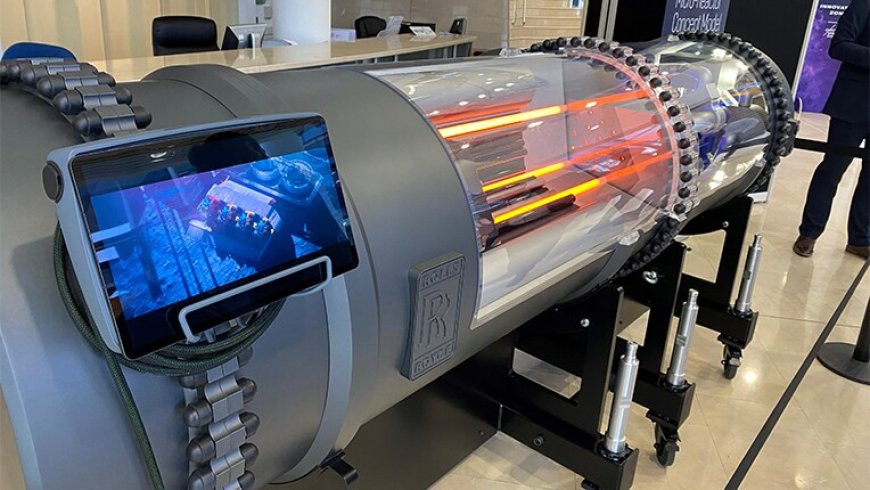
Accelerated implementation of small modular reactors (SMRs) is also in the spotlight at COP. SMR also offers flexible and cost-effective options for supplying power to small energy grids, making it suitable for energy-intensive industries, data centers, and commercial vessels.