Youth vs. Coal: Fight for Indonesia’s green financial future
indonesian youth, coal divest, renewable energy, youth
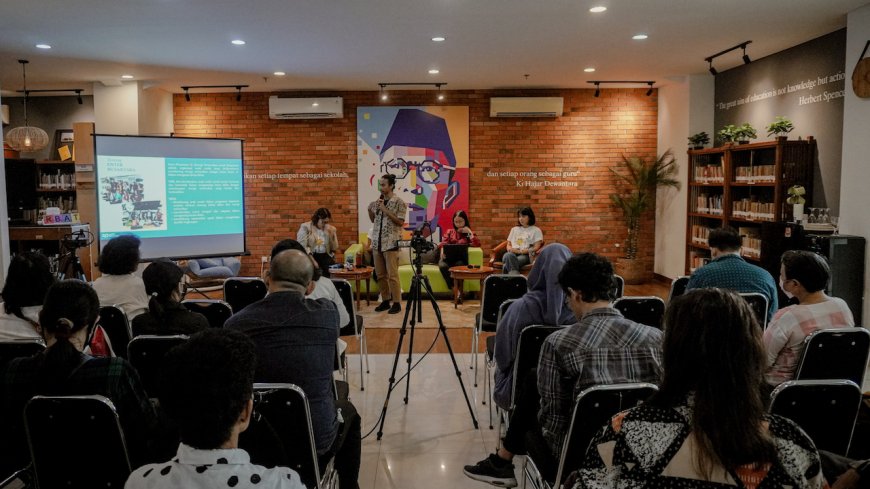
MOSAIC-INDONESIA.COM,JAKARTA – A recent study by Enter Nusantara has revealed a high level of awareness among young banking customers regarding domestic banks’ financial support for the coal industry. The report urges financial institutions to immediately halt funding allocations deemed to undermine national climate commitments.
During the launch event at the Alex Tilaar Learning Space in Jakarta on Monday (27/10/2025), Enter Nusantara disclosed that from 2016 to 2022, domestic banks had channeled a massive US$19.5 billion – equivalent to over Rp305 trillion (based on estimated exchange rates) – into the fossil fuel energy sector. This figure stands in stark contrast to funding allocated to renewable energy projects, which amounted to only about US$1.7 billion, or approximately Rp28.286 trillion.
The study, which surveyed young customers aged 17–35 in the Jabodetabek area (Greater Jakarta), indicates a strong readiness among this generation to take action.
“The survey results prove that young people have issued a mandate for change, and that transparency is the trigger for activism,” said Ramadhan, Project Lead of #BersihkanBankmu (“Clean Up Your Bank”).
“This report is crucial for formulating measurable advocacy strategies to pressure banks – including Danantara – to prioritize transparency and shift toward renewable energy, in line with Indonesia's climate commitments.”
Coal production dilemma highlighted
The report also underscores the dilemma surrounding national coal production. While Indonesia stands on the frontlines of the climate crisis, more than 88% of its electricity still relies on fossil fuels, with 60% coming from coal. Ironically, in 2024, Indonesia's coal production reached a record high of 836 million tons, an increase of nearly 8% from the previous year. Projected coal demand for power generation is expected to rise from the current 90 million tons to 150–160 million tons by 2028–2030.
The study specifically analyzed the role of Danantara, Indonesia’s state-owned strategic investment manager, which holds control over banks that are the largest funders of coal in Indonesia. The findings serve as a foundation for Enter Nusantara and civil society organization (CSO) partners to increase public pressure for a shift toward more sustainable investment policies.
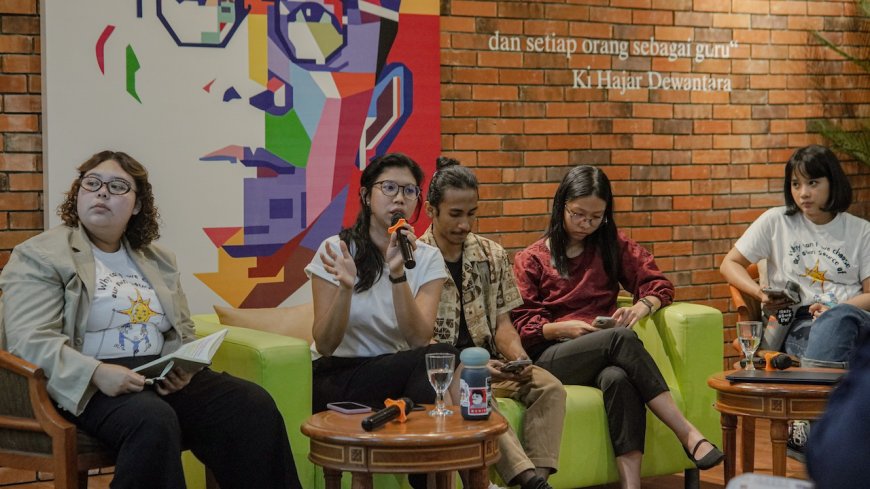
A panel discussion involving the Center of Economic and Law Studies (CELIOS), Enter Nusantara, and the Energy Shift Institute emphasized that the accountability of financial institutions – particularly Danantara and domestic banks – is crucial in shaping Indonesia’s energy future.
Experts stressed that banks must take responsibility and swiftly redirect investments toward clean energy.
“As a society, we must demand that the government and banks be more open about where our money is going. When we have complete information, we can make better decisions,” said Rani Septyarini, Researcher at CELIOS.
Nabila Gunawan, Senior Analyst at the Energy Shift Institute, added:
“If Indonesia is serious about attracting green investment, then the Financial Services Authority (OJK), the Fiscal Policy Agency (BKF), and relevant ministries must start addressing whether the current taxonomy is strengthening or weakening energy transition signals to the market. A non-credible taxonomy could make climate and green investors hesitant to invest in Indonesia. Indonesia must look ahead and set clear boundaries, ensuring that coal-fired power plants are not categorized as green or transitional. This is a crucial step to convince green investors that Indonesia is serious about its green transition.”
Demand for transparency and accountability
Nabila Putri, Program Manager at Enter Nusantara, emphasized:
“We do not want the future of our living environment to deteriorate further because our money is being used to fund the dirty coal industry. Banks in Indonesia must be transparent about where public funds are flowing. All of us, especially young people, have the right to know how our money is being used – because our money represents our actions!”
The presentation of these research findings is hoped to serve as a catalyst, pushing domestic banks and Danantara to immediately stop financing coal and accelerate a just and sustainable energy transition agenda in Indonesia.