Renewable Energy Challenge in 2026
President Prabowo stated that Indonesia will phase out fossil energy in the next 15 years.
MOSAIC-INDONESIA.COM, JAKARTA — The 2026 Renewable Clean Energy (EBT) target is still quite challenging. Moreover, the Government again failed to achieve the EBT target in the national primary energy mix throughout 2025. Data from the Ministry of Energy and Mineral Resources (ESDM), the target of achieving PLN 2025-2034 Power Supply Business Plan (RUPTL) in 2025 reached 15.9 percent. Meanwhile, by October 2025, the EBT mix in national energy stood at 14.4 percent or 15.47 gigawatts(GW).
According to The IESR study titled "Indonesia Energy Transition Outlook 2026" Indonesia failed to meet its renewable energy targets for nine consecutive years. The latest target of 23 percent by 2025 failed to be achieved with a realisation of only 16 per cent although the target has been revised to 19 per cent in the newly established National Energy Policy.
The new administration has signaled a different ambition. At the G20 summit, President Prabowo Subianto declared Indonesia would abolish fossil fuels in ten to fifteen years and implement 100 percent renewable energy. Such commitments are important when made internationally. Nevertheless, what the president stated and the realization on the ground were judged to be gaps.
A total of 400 projects are needed to redirect the electrical system, but its implementation has been stalled for two years. At the very least, there are three main obstacles hindering progress. First, infrastructure, which is the main obstacle. Indonesia's electricity grid is called unfragmented and inadequate for the varying proportions of renewable energy. Storage capacity is almost non-existent. Second, policy coordination among government agencies remains weak, and competing interests and priorities among those agencies slow implementation.
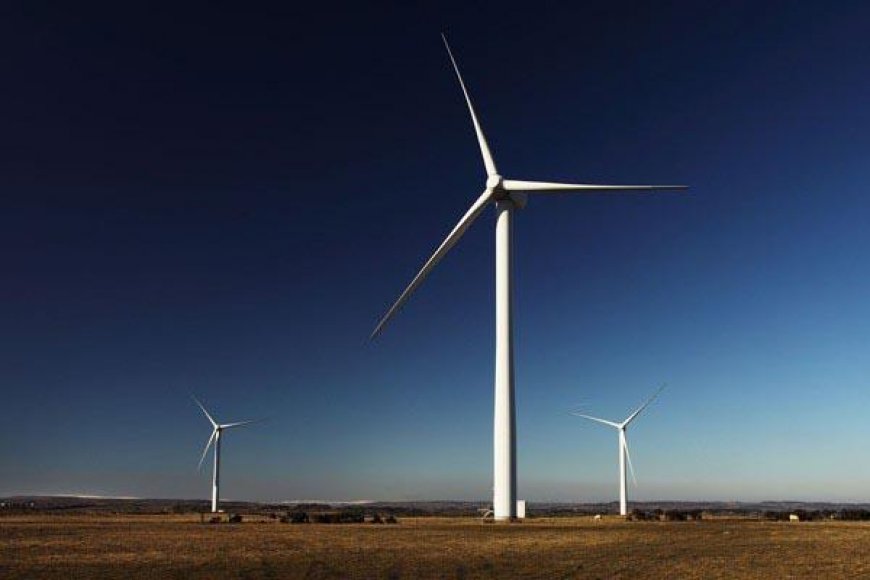
The central government is setting renewable energy targets while state power company PLN is still planning coal-fired and other fossil fuel power plants. The diesel generator replacement program has been stalled for three years, with no clear target on how it will be implemented and completed.
Third, funding is limited. Indonesia faces a multibillion-dollar funding gap for energy transition projects. Although the $20 billion Fair Energy Transition Partnership provided useful capital, most of the funding came in the form of loans, not grants, but its implementation stalled.
Achieving 8% annual economic growth by 2029 risks producing 17% higher emissions by 2040 compared to a low-growth scenario due to continued reliance on fossil fuels. By depleting the rest of the carbon budget to limit temperature rises to 1.5°C as early as 2040, it will be almost impossible to meet the country's responsibility to maintain that temperature rise unless Indonesia immediately breaks the link between economic growth and fossil energy use.
With only 9% of the energy resilience budget allocated to ET development in the latest national energy policy, while the total potential of renewable energy across the country exceeds 3 TW, the huge potential of ET remains untapped. Electricity Sector • IESR assesses the energy transition conditions in the sector based on the degree of renewable energy mix, progress in phasing out fossil fuels, and the presence of support grid infrastructure. The use of fossil fuels, which produce emissions above 350 MtCO2e by 2024, continues to dominate Indonesia's electricity sector.
Coal-fired power generation capacity has the largest portion of total installed capacity (80 GW of the total 120 GW capacity of the entire power plant, both on-grid and captive). Emissions from coal are expected to continue to rise, along with the failure of MEMR Regulation No. 10/2025, which is the legal basis for early retirement of coal-fired power plants, in support of more concrete measures. • Increased electricity demand (10.3%, 3.4%, and 6.3% CAGR from 2020—2024 respectively for the high, medium, and low voltage segments) demands expansion of generating capacity. Although technological advances allow for drastic reductions in the construction time of PLTS and rapid deployment rates of utility batteries, renewable energy has not been integrated further into electricity supply plans. Its share in on-grid electricity generation is down to just 11.5% by 2024.
With
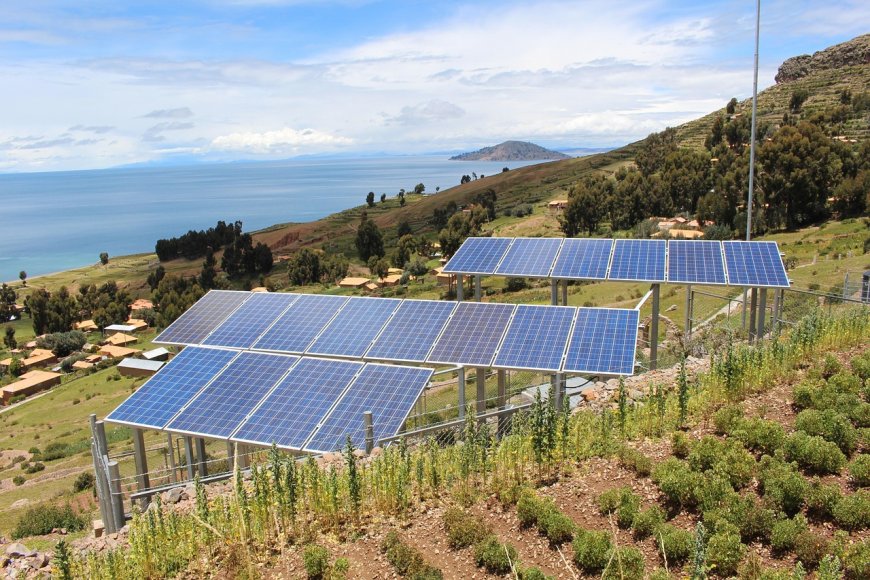
In contrast, RUPTL PLN 2025—2034 plans the addition of 16.6 GW of fossil capacity, including 1.4 GW of new coal projects. The President's ambition to achieve 100% renewable electricity within a decade and 100 GW of rural solar power through the Red White Village Cooperative program has not been included in any formal planning. The IESR urged more concrete ways to realise the ambition given the promising study results of a 100% simulation of renewable systems in Timor and Sumbawa by 2050 from PLTs and batteries. Such systems can lower the cost of helpers.
Missed target
Director General of New Energy, Renewables, and Energy Conservation (EBTKE) of the Ministry of ESDM Eniya Listiani Dewi is adamant that achieving the initial target of 23% EBT mix will be difficult to realize by 2025.
Moreover, in 2024 alone, the EBT achievement in the national energy mix is only 14.68% from the supposed 19.5%, reports Bloomberg Technoz.
Instead, the 23% EBT target in the primary energy mix is projected to be reached by 2030. Meanwhile, by 2045 or during the Golden Indonesia period, the target EBT mix is targeted at 46%.
For information, the Ministry of ESDM officially approved the Electricity Supply Business Plan (RUPTL) of PT Perusahaan Listrik Negara (Persero) or PLN Period 2025—2034.
In the RUPTL, the government set a target that 76% of the total additional capacity in the period 2025—2034 would come from EBT and storage or energy storage systems.
The total addition of power generation capacity in PLN RUPTL during the period is projected to reach 69.5 GW, comprising an EBT generation of 42.6 GW (61%).
Later, storage included Battery Energy Storage System (BESS) and PLTA Pumped Storage totaling 10.3 GW (15%), as well as 16.6 GW of fossil fuel generation.
As for the development of EBT plants, the development plan is spread across five major regions of Indonesia. Jawa—Madura—Bali (JMB) will be the main contributor with a total generating capacity of 19.6 GW and storage 8 GW.
Sumatra followed with a total generating capacity of 9.5 GW and storage of 1.6 GW, while Kalimantan had a total generating capacity of 3.5 GW and storage of 0.7 GW.