'Electric Woman' called Tri Mumpuni
The problem was, the adhan would never be heard without electricity reaching the mother’s village.
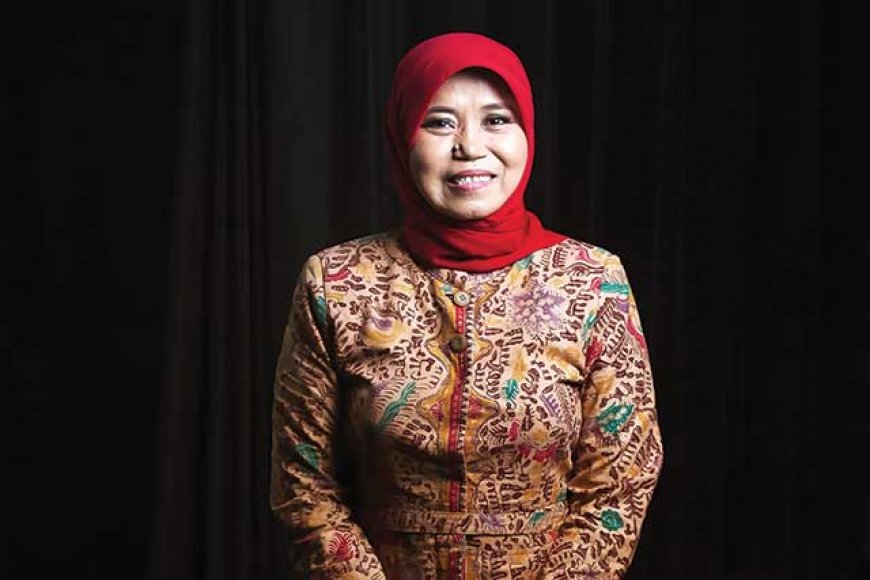
MOSAIC-INDONESIA.COM; Tri Mumpuni has carved some achievements for pioneered Micro Hydro Power Plants in hundreds of villages across Indonesia. With her touch, she revolutionized villages which were to be dark and poor.
Together with her husband, Iskandar Budisaroso, she traveled across hundreds of regions in the country to build micro-hydro power plants that involve local community elements, enabling them to also enjoy the brightness of electricity.
How did this figure, listed among the 22 Most Influential Muslim Scientists in “The 500 Most Influential Muslims” by the Royal Islamic Strategic Studies Centre, first conceive the idea of micro-hydro power?
As reported by Republika, the woman which titled the “Electric Woman” said her journey began with a complaint from a mother she met. Though simple, the request was difficult to be fulfilled. “That mother wanted the sound of the adhan from the mosque to reach her home,” Tri said at the time.
The problem was, the adhan would never be heard without electricity reaching the mother’s village. From that moment, she was determined to bring electricity to all regions of Indonesia. Moreover, she often saw villages abundant with water resources, yet without electricity distribution lines. This meant the communities there could not carry out activities like those of us who easily enjoy electricity, especially for lighting at night.

In an interview with DW, Tri Mumpuni explained that many villages are geographically suitable for micro-hydro plants, such as Cinta Mekar village in Subang, West Java.
Through the Institute for People’s Business and Economics (IBEKA), she has helped establish at least 65 micro-hydro plants in remote villages. As of April 2020, 433 out of 75,000 villages in Indonesia were still without electricity. Most of these villages are located in Papua, West Papua, East Nusa Tenggara, and Maluku.
Micro-Hydro Power plants empowering local economies
The focus of the social entrepreneurship championed by Tri Mumpuni is not merely providing lighting for local needs. The micro-hydro plants she develops are community-based power systems, where 50% of the output is owned by private investors, while the other half is owned by the community and managed through cooperatives.
One example is the cooperative at the Cinta Mekar Micro-Hydro Plant in Serang Panjang District, Subang Regency, West Java. When the plant was built in 2002, surplus electricity was sold commercially to PLN (the state electricity company), with profits used to fund children's school fees, health subsidies, or capital for village businesses.
With 30 years of active involvement in village development alongside her husband Iskandar Budisaroso, Tri Mumpuni believes that villagers must be involved and benefit from the introduction of technology. “How can clean energy be brought to villages, and how can those villages generate income by utilizing the local resources we build? We bring technology and financing, but ownership remains with the people,” Tri Mumpuni told DW Indonesia.
Even if a micro-hydro plant ceases operation, the community can still benefit through the cooperative. For instance, the Cinta Mekar plant halted operations in 2017 due to low electricity prices offered by PLN. “The Mekarsari Cooperative is still running because it has 50 million in business capital. It’s still circulating, thank God—its 100 active members continue to receive smooth loans,” said Yuyun Yunengsih, Chairperson of the Mekarsari Micro-Hydro Cooperative.
However, assistance for villagers does not only come through cooperatives. In Kamanggih Village, Kahaungu Eti District, East Sumba, East Nusa Tenggara, for example, after the micro-hydro plant was built in 2011, villagers used electricity to pump water from the valley. Rural women, who previously spent up to seven hours a day fetching water, can now focus on weaving textiles that can be sold to supplement family income.
Lihat postingan ini di Instagram
Training Village Patriots
According to the IBEKA Director, villages actually hold potential and are key to building Indonesia. “Indonesia can be great and strong if villages are truly developed in the right way. Villages have natural resources, villages have everything... The only thing we lack is qualified people willing to live in and develop villages properly. That’s the key,” said the graduate of Socio-Economics from Bogor Agricultural University.
Nevertheless, Tri regrets that the potential of Indonesia’s villages has not yet become a focus of development, often causing villages to be abandoned by their younger generation. This is due to an education system that overlooks rural contexts and potential. “What happens is that our education system teaches village children that if they become smart, they should leave the village because the village promises nothing,” she said.
That is why, together with the West Java Provincial Government, she developed the “Patriot Desa” (Village Patriots) program to train young people willing to engage in village development. One of its activities is called One Village One Company (OVOC), which aims to maximize village potential by establishing Village-Owned Enterprises (BUMDes).
Why do villages remain poor?
The creation of self-reliant businesses within village communities, according to Tri Mumpuni, is crucial because so far, village development has tended to only involve investors, leaving villages trapped in poverty.
“Many government regulations actually lead to or perpetuate poverty. The simplest example: local governments feel proud and happy to attract investors, but investors bring money, technology, and good management—yet they only need local resources. They don’t involve the community. That’s where poverty arises. Poverty is a symptom; the root cause is that communities are separated from the local resources where they live,” said the woman who has been active in building micro-hydro plants since 1997.
She also often feels frustrated because, despite having built micro-hydro plants in many places, Tri Mumpuni feels her efforts have not yet brought about maximal change.
“When I only visit a place, for example in East Nusa Tenggara, and I come to villages, suddenly it hits me when I see a small child. I feel like 30 years ago I came to NTT doing the same thing—providing clean water so mothers wouldn’t suffer going up and down steep terrain. And the children wouldn’t have to do that either. Yet there are still areas that look exactly as they did 30 years ago. That means something is not right,” Tri Mumpuni explained.
Despite this, Tri Mumpuni does not give up. Besides continuing to actively develop renewable energy beyond micro-hydro, she also remains hopeful that change can still happen within government bodies, especially those overseeing the country’s electricity sector.
“I am waiting for a new director with a commitment to building this nation by advancing renewable energy while making villages prosperous—because villages can have income from the energy generated by micro-hydro plants located within them,"she said.