
Renewable energy will grow faster than any other source
The IEA forecasts global investment in renewables to reach $580 billion in 2025
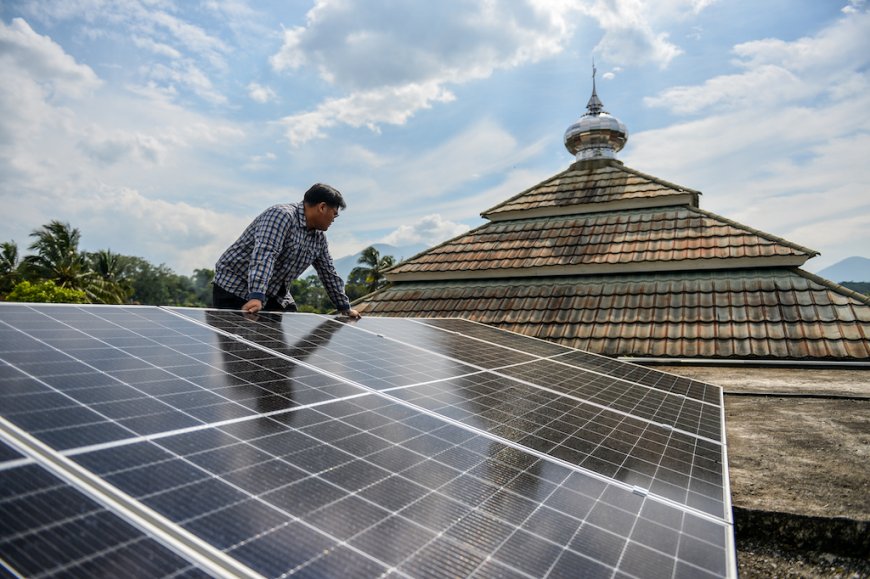
MOSAIC-INDONESIA.COM; JAKARTA — Renewable energy is projected to grow faster than any other major energy source over the next decade. According to a report from the International Energy Agency (IEA), the transition away from fossil fuels is now unavoidable, despite backlash from the United States and parts of Europe against environmental initiatives.
The IEA also predicts that more renewable energy projects will be built in the next five years than have been launched over the past 40 years, as reported by The Guardian on Wednesday (12/11/2025).
The report indicates that the surge in renewable energy will meet nearly 40% of the world’s continuously growing electricity demand over the next decade, driven by increasing demand for electric vehicles, heating, cooling systems, and power for AI data centers.
In addition, the IEA notes a rise in nuclear energy, spurred by major tech companies seeking stable low-carbon power for data centers.
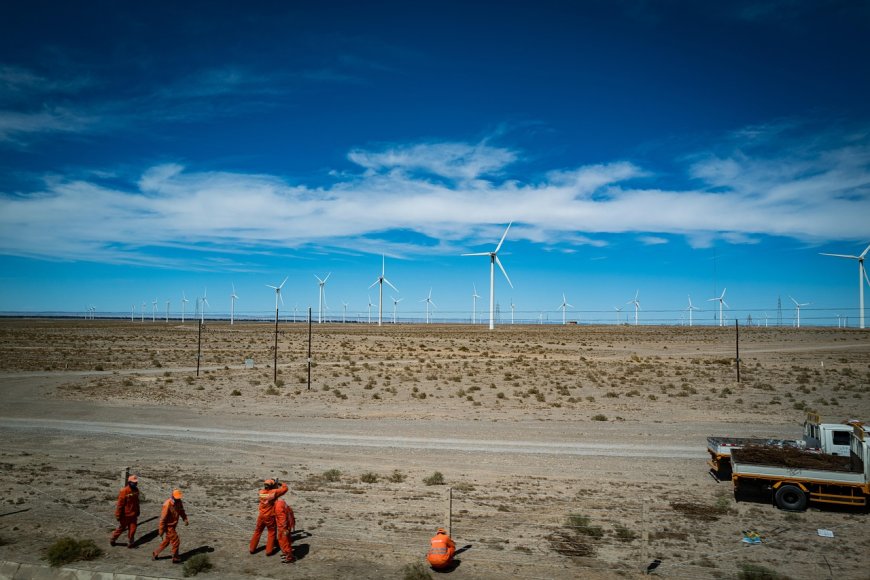
The IEA forecasts global investment in renewables to reach $580 billion in 2025, surpassing the $540 billion spent on global oil supply. This increase in low-carbon electricity is expected to “lock in” the shift from the fossil fuel era, despite calls from the Donald Trump administration to retreat from green investments in favor of oil and gas drilling.
David Tong, a campaigner at Oil Change International, stated that the IEA report confirms “no single country can stop the energy transition.” He urged world leaders gathering in Belém, Brazil, for the UN COP30 climate talks to reject Trump's dystopian vision and commit to a rapid, just, and funded phase-out of fossil fuels.
The IEA’s findings are expected to empower leaders at COP30 to push for progress toward the global target of tripling renewable energy by 2030 and transitioning from fossil fuels, as agreed at COP28 in Dubai. The Paris-based agency reportedly faced pressure from the US Republican Party to present a more optimistic outlook for the fossil fuel industry in its report than earlier projections suggested.
In its report, the IEA reintroduced a scenario from a previous study that offers a “more cautious” perspective on the pace of the energy transition. Dave Jones, lead analyst at the research group Ember, noted that this scenario seems to underestimate electric vehicle (EV) adoption, leading to higher oil consumption projections compared to the IEA’s main scenario. Nevertheless, he added, the rapid expansion of renewables remains “unstoppable.”
“Renewables and electrification will dominate the future — and all fossil fuel-importing countries stand to gain the most by embracing them,” said Jones.
The IEA found that in all modeled scenarios, renewables will grow faster than any other major energy source, driven by a surge in cheap solar power in regions with abundant sunlight, such as the Middle East and Asia.
Trump’s decision to withdraw support for the renewable energy sector is projected to leave the U.S. with about 30% less solar energy by 2035 compared to last year’s IEA forecast. Despite this, renewables are expected to continue “expanding rapidly,” according to the report.
Lihat postingan ini di Instagram
Renewables in Indonesia: Falling short of targets
The Ministry of Energy and Mineral Resources (ESDM) predicts that Indonesia’s target for renewable energy in the national primary energy mix for 2025 will not be achieved. As of October 2025, renewables accounted for only 14.4% of the national energy mix, equivalent to 15.47 gigawatts (GW), while the 2025–2034 PLN Electricity Supply Business Plan (RUPTL) set a target of 15.9%, as reported by Bloomberg Technoz.
Tri Winarno, Acting Director-General of Electricity at the Ministry of ESDM, acknowledged the difficulty of reaching the renewable energy target by year-end.
“For 2025, we’re still about 2% short — it seems we won’t make it,” Tri stated at the Parliament Building on Friday (14/11/2025).
Tri explained that Indonesia’s installed power capacity reached 107 GW as of October 2025, with renewables making up 14.4% or 15.47 GW. This share breaks down as follows:
- Hydropower (PLTA): 7.1% (7.57 GW)
- Biomass power: 3% (3.17 GW)
- Geothermal power (PLTP): 2.6% (2.74 GW)
- Solar power (PLTS): 1.3% (1.37 GW)
- Wind power (PLTB): 0.1% (0.15 GW)
- Coal gasification power (PLTGB): 0.4% (0.45 GW)
Tri emphasized that Indonesia’s power system cannot abruptly abandon coal-fired power plants (PLTU), which play a significant role in maintaining energy reliability.