Culture and religion protect Sumatran Tigers
The survival of the King of the Forest from extinction is believed to be no different from the culture.
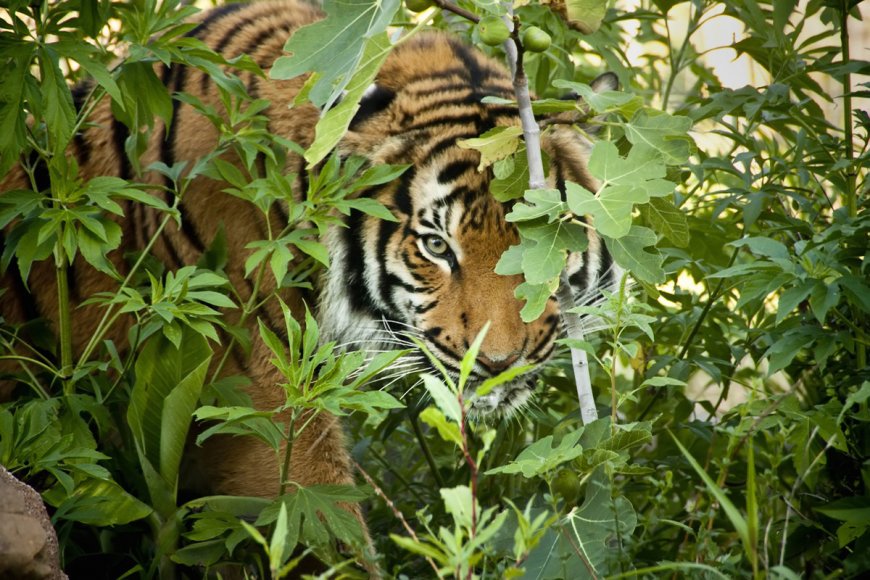
MOSAIC-INDONESIA.COM, JAKARTA — The existence of Sumatran tigers is extremely reduced. Recent research shows that there are only about 400 of them in the entire Sumatran forest. Although the population of the species called Panthera Tigris Sumatrae is not as large as it used to be, they can still survive in the midst of the extinction of other species such as the Javanese tiger and the Balinese tiger.
The survival of the King of the Forest from extinction is believed to be no different from the culture closely embraced by the people of Sumatra. Datuk Sibungsu Atilah Majidi, Culturalist from West Sumatra revealed that local wisdom made tigers still exist. “We call tiger datuak, an honorary title among men in Minang,” Sibungsung said while speaking at the FGD with the National University's Center for Islamic Studies (PPI) some time ago.
He explained that Datuak was responsible to his nephew, his village, village or nagari. Traditionally, a datuak is responsible for looking after the heirloom so that the child and offspring can grow and develop so that they are not miserable. “The tiger, in addition to being known as the king of the forest, is a form of datuak that should be appreciated. He is the one who takes the step, looking after the victorious child,” said Datuk Sibungsu.
Rheno Julianto, a PhD student at the National University who researches Sumatran tigers, revealed that tigers are not just wild animals, but creatures that populate the social, cultural and spiritual spaces of society. Rheno, who interviewed several indigenous and religious figures such as datuk, hulubalang and youth figures from Nagari Sriak Alahan Tigo in West Sumatra, revealed that tigers are not only seen as predators or biological threats. According to him, local residents view tigers as symbolic, spiritual and even social creatures.

Some hypotheses regarding tigers are as inyiak (ancestors), tiger humans, wild animals, pets of handlers, ancestral elmaan until tigers as mere creatures. Interestingly, Rheno said, of the 42 informants interviewed, all assumed that tigers were their ancestral inyiak. “It's not like other animals like bears or snakes,” he said.
Therefore, Rheno revealed, the people of Sari Alam Tigo would not disturb the tiger. They even had 26 abstentions that revolved around the protected animals. Among them, one should not stick pegs to a wooden stump, one should not shout at the tiger when it sees it, silence should not make fun of the tiger, one should not make pndokan or tent on the bone of a hill that becomes a path from the tiger.
Researcher from the National Indonesian Research Agency (BRIN) Dr Fathi Royani said that the bilogical perspective shows that the Sumatran tiger is the only species left in its habitat. The survival of the Sumatran tiger is different from that of the Javanese and Balinese tigers that can currently only be seen in museums, although international conservation agencies have already categorized the Sumatran tiger as an endangered animal or in the red category.
In addition to being culturally respected, the Sumatran Tiger was also the inspiration for the foundation of the Silat Minang movement, which is often referred to as silek. According to Fathi, the Minangkabau tribe generally named their silat by the name Silek Minang. He explained that Silat Minang was developed by one of the advisors of Sultan Sri Maharaja whose king named Datuk Suri Dirajo is estimated to have been established in 1119 AD in the area of Pariangan, Padanganjang, West Sumatra. The origin of silat minangkabau was formed and located in Pariangan, which is on the southeastern slope of Mount Merapi.
According to Royani, this is evidence that humans entered the tiger's natural system through pencak silat in order to recognize what a tiger is.
In addition to culture, tigers are also protected with religious capital. Royani mentioned that some of the Tasawuf sects that exist in West Sumatra express the teaching of harmony with nature as a manifestation of worship. Moreover, he said, the existence of the fatwa of the Indonesian Ulama Assembly (MUI) No. 4 of 2014 on the Conservation of Rare Animals contains a ban on the hunting of protected animals. Tigers are one of them.
Charismatic animal
Chairman of the Center for Islamic Studies (PPI) of the National University, Dr Fachruddin Mangunjaya, revealed that tigers living in West Sumatra are charismatic animals that experience challenges in terms of conservation. He explained that the habitat of these animals is shrinking and the habitat is becoming more limited.
The narrowness of protected areas and conservation areas causes the tiger's habitat to be severely limited. Ironically, there 70% of tiger habitat is outside conservation areas (national parks and protected forests).” “To prevent widespread conflict, mitigation should be taken, including by increasing tolerance for the presence of tigers,” he said.
He explained that the focus group discussion (FGD) is a part of the research conducted to find out the relationship between tigers, culture, and spirituality of the people of West Sumatra, which is associated with conservation goals. It is important as part of conservation strategies, not only for important species but also for the habitat of protected species.
Among the close relationships between humans and Sumatran tigers, he said, is to make tigers part of them. He said that the people of Sumatra in general and West Sumatra in particular give designations that respect and honor tigers.
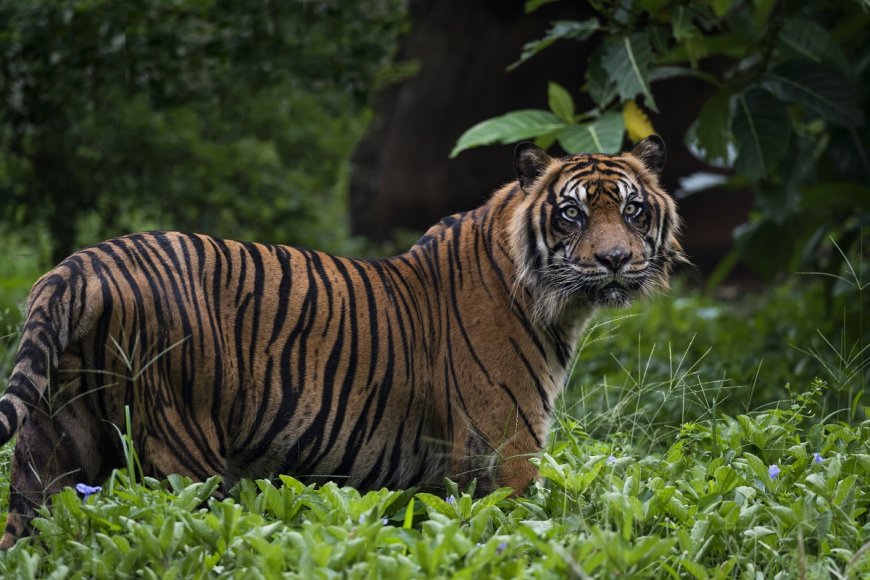
“People refer to tigers as Datuk, Angku, Inyiak, and Orang Tuo. For society, tigers are part of an ancestor that must be respected,” he said.
The titles can also be interpreted as people's attempts to include tigers as part of their family. In the family system in West Sumatra, Datuk, Angku, Inyiak, and Orang Tuo are designations for those who were raised.
In its development, said academics who focus on the field of biology, people also received ideas, views, and spirit from Islam that has long entered and developed in West Sumatra. The Islamic teachings derived from the Qur'an and the Hadith are tangent with the culture and customs of the people that are sourced from the experience of interaction with their environment.