Faith in action: How ecotheology runned in forest waqf to green office
Religious Ministry collaborate with MOSAIC and BWI to build Waqf Forest Program.
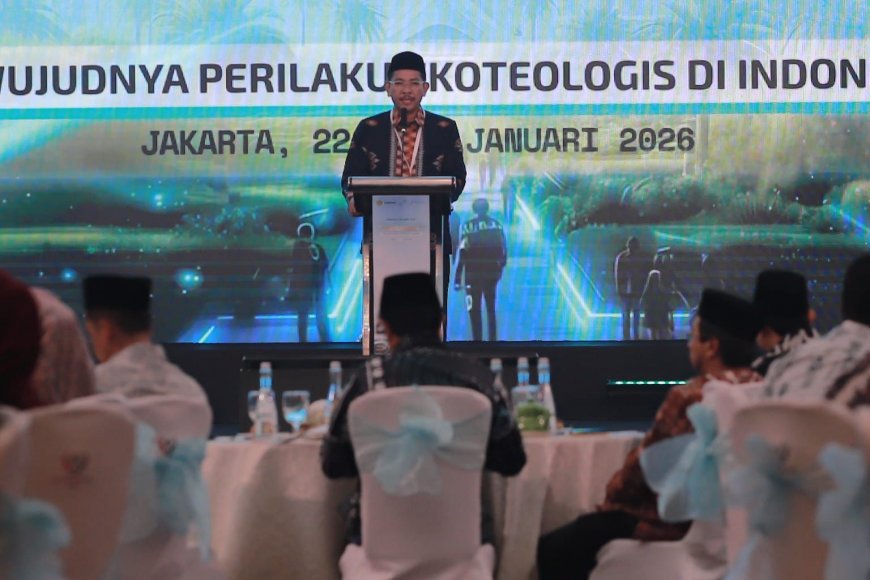
MOSAIC-INDONESIA.COM, JAKARTA — Religion and the environment become the central theme for the Religious Affair Ministry's programs in 2025. The ministry continues to mainstream ecotheology in various community development initiatives, implementing tangible actions ranging from developing waqf forests to constructing environmentally friendly Religious Affairs Offices (KUA).
These ecotheology practices were highlighted by the Director General of Islamic Community Guidance at the Ministry of Religious Affairs, Abu Rokhmad, during the National Working Meeting (Rakernas) of the Directorate General of Islamic Community Guidance in Jakarta on Thursday, January 22, 2026.
The meeting with titled “Preparing and Serving the Future Ummah,” carried the tagline “Realizing the Implementation of Ecotheological Behavior in Society.” According to Abu Rokhmad, ecotheology must not remain merely a discourse but should translate into tangible daily practices of the Muslim community.
“Ecotheology is part of Islamic values. Faith is reflected not only in ritual worship but also in environmental stewardship,” he stated.
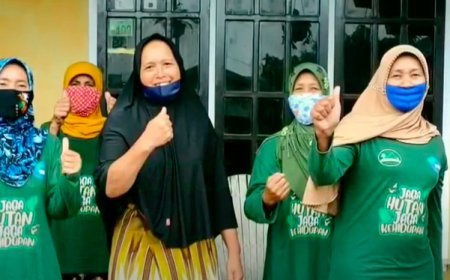
The Directorate General of Islamic Community Guidance has launched several environment-based programs, including the construction of 154 KUAs designed with green building principles. Additionally, there is a “Tree Waqf” program involving 1.5 million prospective brides and grooms, and the development of Waqf Forests spanning 40 hectares across 11 locations, in collaboration with IPB University, MOSAIC, and the Indonesian Waqf Board (BWI).
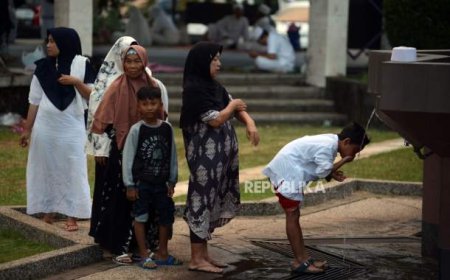
Abu Rokhmad also emphasized the role of mosques as centers for ecotheology education. Currently, 1,507 pilot mosques are being developed as eco-friendly mosques.
“Mosques are not only places of worship but also hubs for community development and ecological awareness,” he added.
The ecotheology movement is also being driven through Majelis Taklim (Islamic study assemblies) with a program to plant one million matoa trees, aiming to foster environmental consciousness at the community level.
On the academic and religious narrative front, the Ministry of Religious Affairs organized the International Conference on Islamic Ecotheology for the Future of the Earth, involving scholars and academics. Abu Rokhmad emphasized that such conferences are crucial for strengthening the scientific foundation and literacy of ecotheology.
“Environmental messages must become an integral part of religious teachings that are easily understood and practiced,” he asserted.
The 2026 National Working Meeting served as a moment of national consolidation to strengthen collaboration, efficiency, and Islamic values in preparing the future ummah.
Message from the Minister
Ecotheology was reiterated by Minister of Religious Affairs Prof. KH Nasaruddin Umar during an international conference held in Egypt, organized by the Ministry of Endowments of the Arab Republic of Egypt on Monday, January 19, 2026.
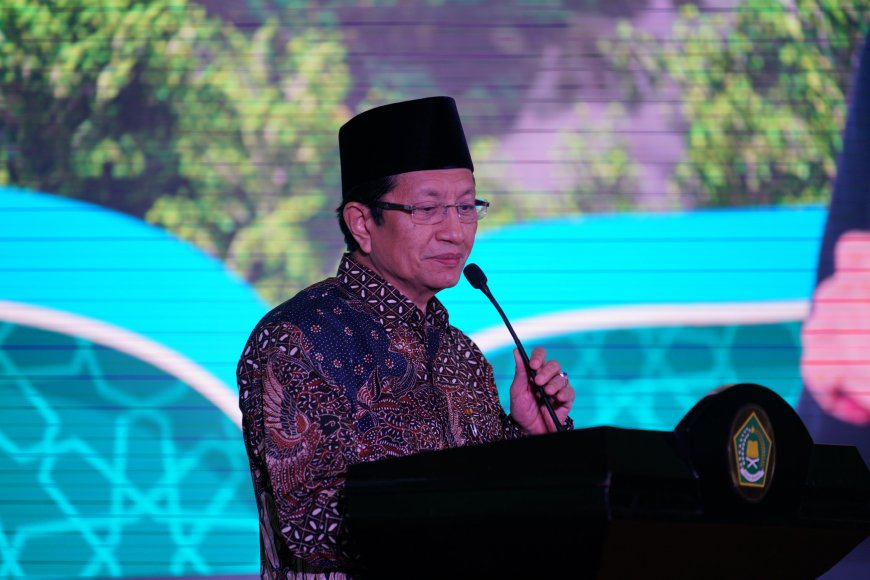
The Minister spoke about ecotheology and the role of religion and humanitarian awareness in the era of Artificial Intelligence (AI). The conference was attended by Egypt’s Minister of Endowments and Chairman of the Supreme Council for Islamic Affairs, Prof. Dr. Usamah Al-Sayyid Al-Azhari, along with scholars, academics, intellectuals, and researchers from various countries.
Minister Nasaruddin elaborated on the meaning of human responsibility from an Islamic perspective. He explained that human responsibility is not merely a means of livelihood but carries moral, social trust, and awareness dimensions regarding the importance of prospering the Earth.
“Within this framework, we emphasize what we call ecotheology—a perspective that understands the relationship between humans and the environment based on the principles of trust and ethical responsibility,” the Minister stated in Egypt on Monday, January 19, 2026.
In Islam, he added, the Earth is not an absolute possession of humans but a divine trust. Therefore, prospering the Earth cannot be achieved without maintaining its balance. Any profession that disrupts this balance fundamentally deviates from the purpose of worship and the essence of civilizational development.